Search “costa rica beaches” and you get a dozen ranked lists that never tell you which coast or town fits the trip you booked. The photos all look the same. The rankings ignore your travel dates, your airport, and whether you actually want to swim.
Here is the call. Fly into Liberia and base in Guanacaste or the Nicoya Peninsula for the shortest drive to reliable December-to-April beach weather. Pick Manuel Antonio if you want calm swimming next to wildlife, and pick the Caribbean around Puerto Viejo only if your dates land in its opposite dry season.
One honest warning before you book. Several of Costa Rica’s most photographed beaches are surf beaches with strong rip currents, not calm swim beaches. Choose by water type, not by the photo.
Pacific or Caribbean? Pick Your Coast by When You’re Traveling
This is the decision that controls the rest. The Pacific coast, where almost every famous beach town sits, runs a dry season from about December through April. Book those months on the Pacific and you get the reliable sun the rankings are selling.
The Caribbean coast runs on the opposite calendar. Its driest, sunniest stretches are roughly February to March and again September to October.
So if your dates are in December, the Pacific rule works, but do not assume it applies to a Caribbean leg like Puerto Viejo, where December is one of the wetter months. May and November are the Pacific shoulder months, greener and quieter with afternoon showers, and often the best value if you can handle some rain. Match the coast to your month first, then pick the town.
The Beach-Town Decision Table, and Which Beaches Are for Swimming vs. Surfing
Start with the table, then read the water-type note under it.
| Town | Coast | Best for | Airport | Water |
|---|
| Tamarindo | Pacific (Guanacaste) | First trip, surf lessons, nightlife | LIR | Surf, some swim |
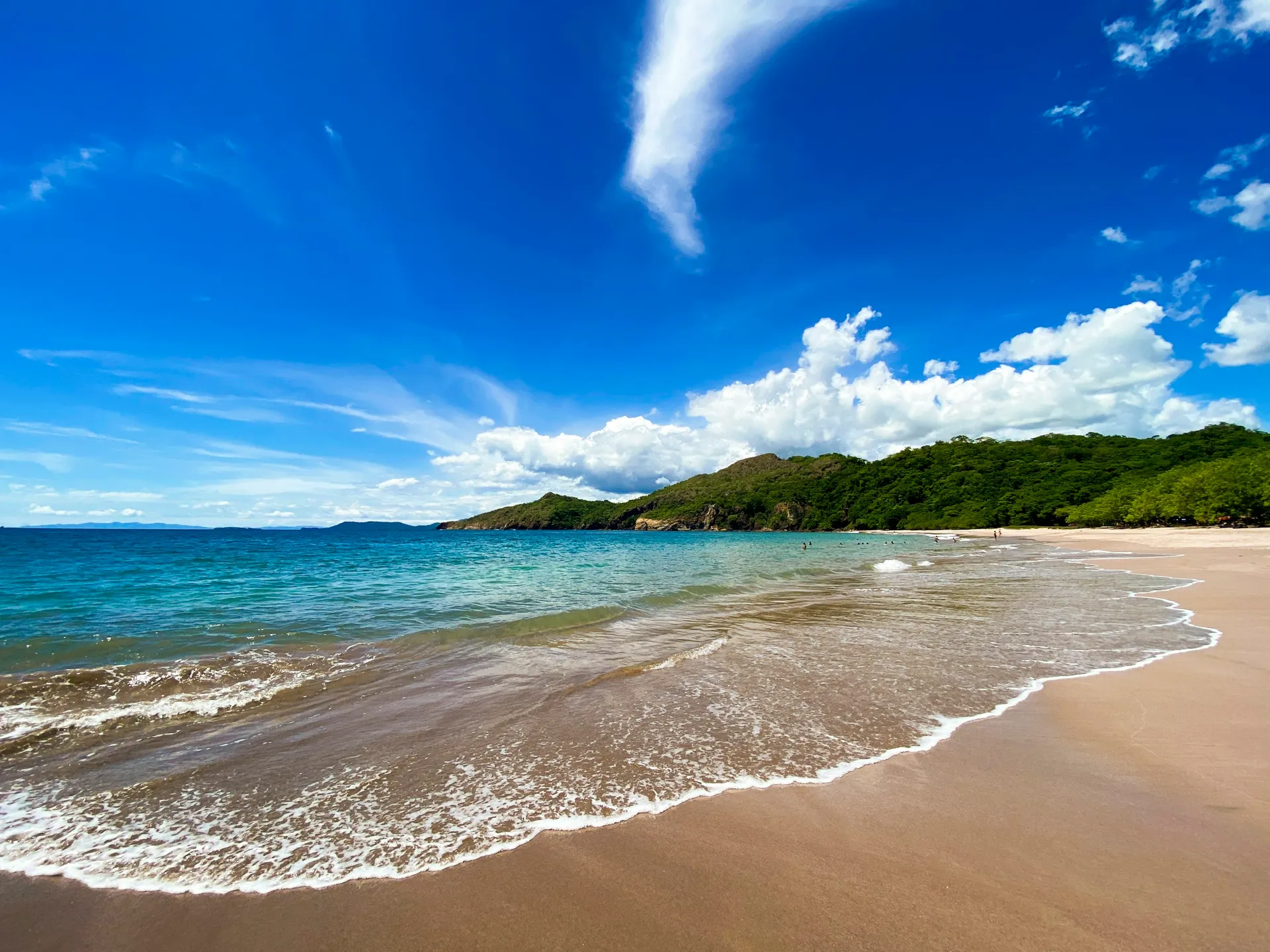
| Playa Conchal | Pacific (Guanacaste) | Clearest water, easy swim | LIR | Swim |
| Sámara | Pacific (Nicoya) | Families, easiest swim | LIR | Swim |
| Santa Teresa | Pacific (Nicoya) | Surf, boho scene | LIR | Surf |
| Nosara | Pacific (Nicoya) | Surf and yoga | LIR | Surf |
| Manuel Antonio | Central Pacific | Wildlife plus calm swim | SJO | Swim |
| Jacó / Playa Hermosa | Central Pacific | Quick surf from SJO | SJO | Surf |
| Puerto Viejo | Caribbean | Reef, culture, black sand | SJO | Mixed, reef |
Many of the beaches people picture are surf beaches with rip currents, so calm swimmable water is the exception, not the rule. The reliable swim beaches are Sámara, Playa Conchal, and the sheltered cove at Manuel Antonio. The strong surf and current are at Santa Teresa, Nosara, Playa Grande, and Playa Hermosa near Jacó.
Lifeguards are rare outside a few main beaches, so this water-type column is doing real safety work. If anyone in your group is a weak swimmer, sort by it before anything else.
Guanacaste and Liberia (LIR): The Shortest Path to a Beach
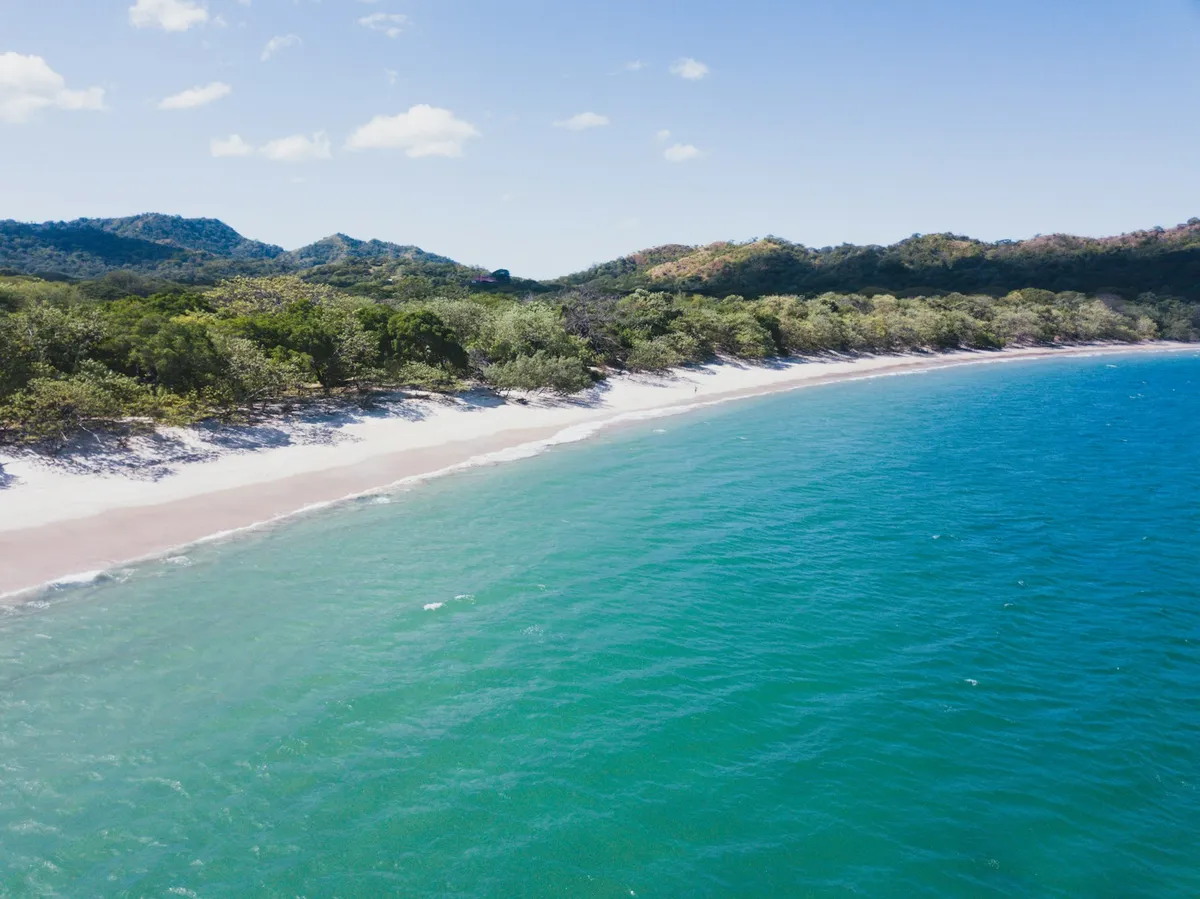
Guanacaste is the fastest beach access in the country and the most reliable dry-season weather. Land at Liberia, drive about an hour on paved road, and you are on the sand the same afternoon. This is why most first beach trips start here, and why the region books up first over the December-to-April high season.
The standouts here are Playa Conchal, with crushed-shell sand and clearer water than most, plus the calm bays at Playa Hermosa and Flamingo. The region’s anchor town is Tamarindo, the easiest first-timer base and also the busiest.
Skip Guanacaste as your base if you came for quiet fishing villages, a tight budget, or rainforest wildlife. It is the developed, convenient coast, and it is priced like it.
The Nicoya Peninsula: Quieter Alternatives to Tamarindo and Jacó
Just south, the Nicoya Peninsula trades amenities for calm. Santa Teresa is the surf-and-boho draw, Sámara is the easiest swim and the most family-friendly, Nosara pairs surf with yoga, and Montezuma is small and artsy.
The tradeoff is the roads. Several of these towns sit at the end of dirt access roads that turn rough in the green season, where an SUV or 4x4 earns its cost. Skip Nicoya if you want walkable amenities and low logistical effort, because getting there is part of the price.
Manuel Antonio and the Caribbean: Beaches with Wildlife, and the Coast on a Different Season
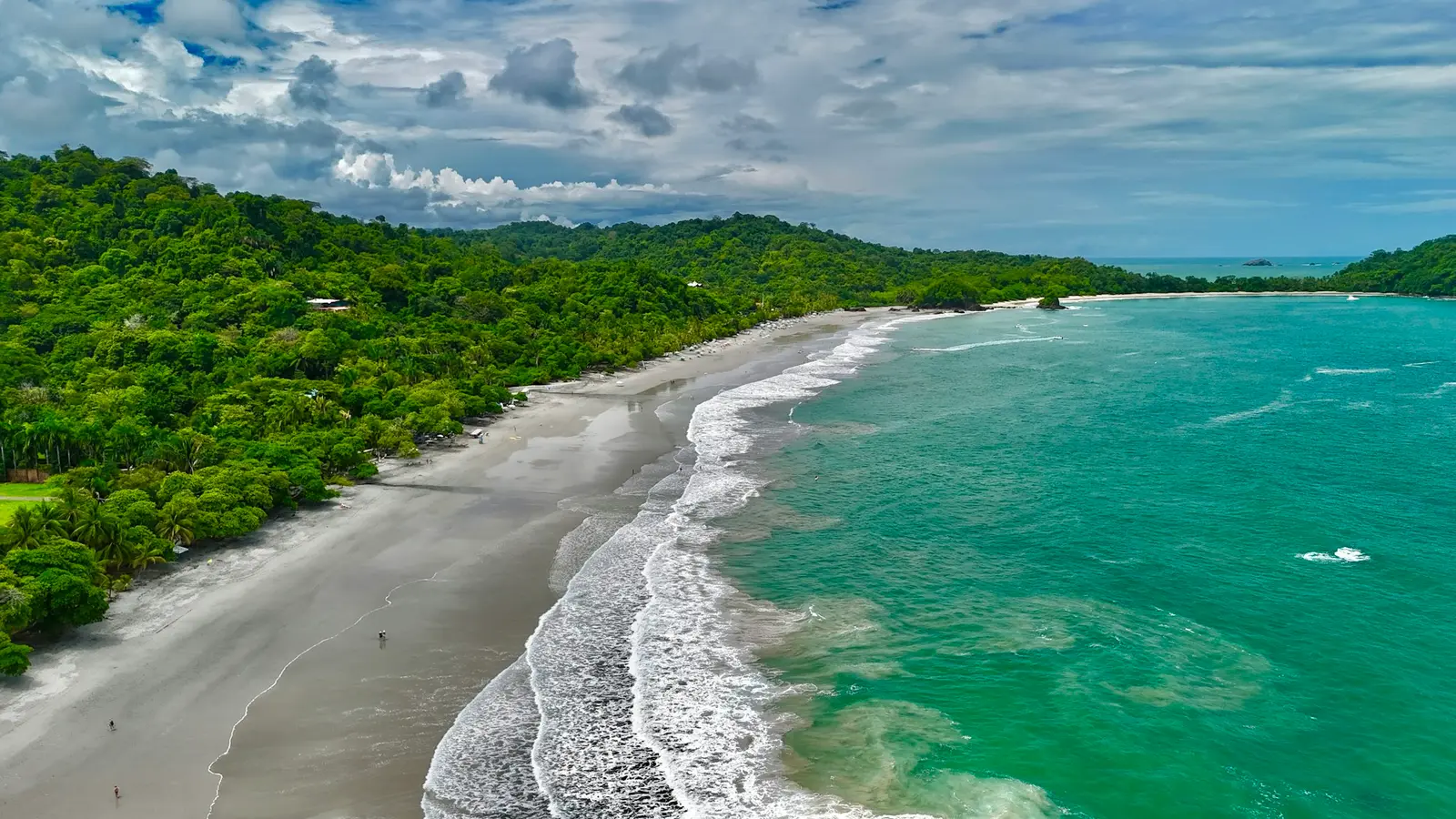
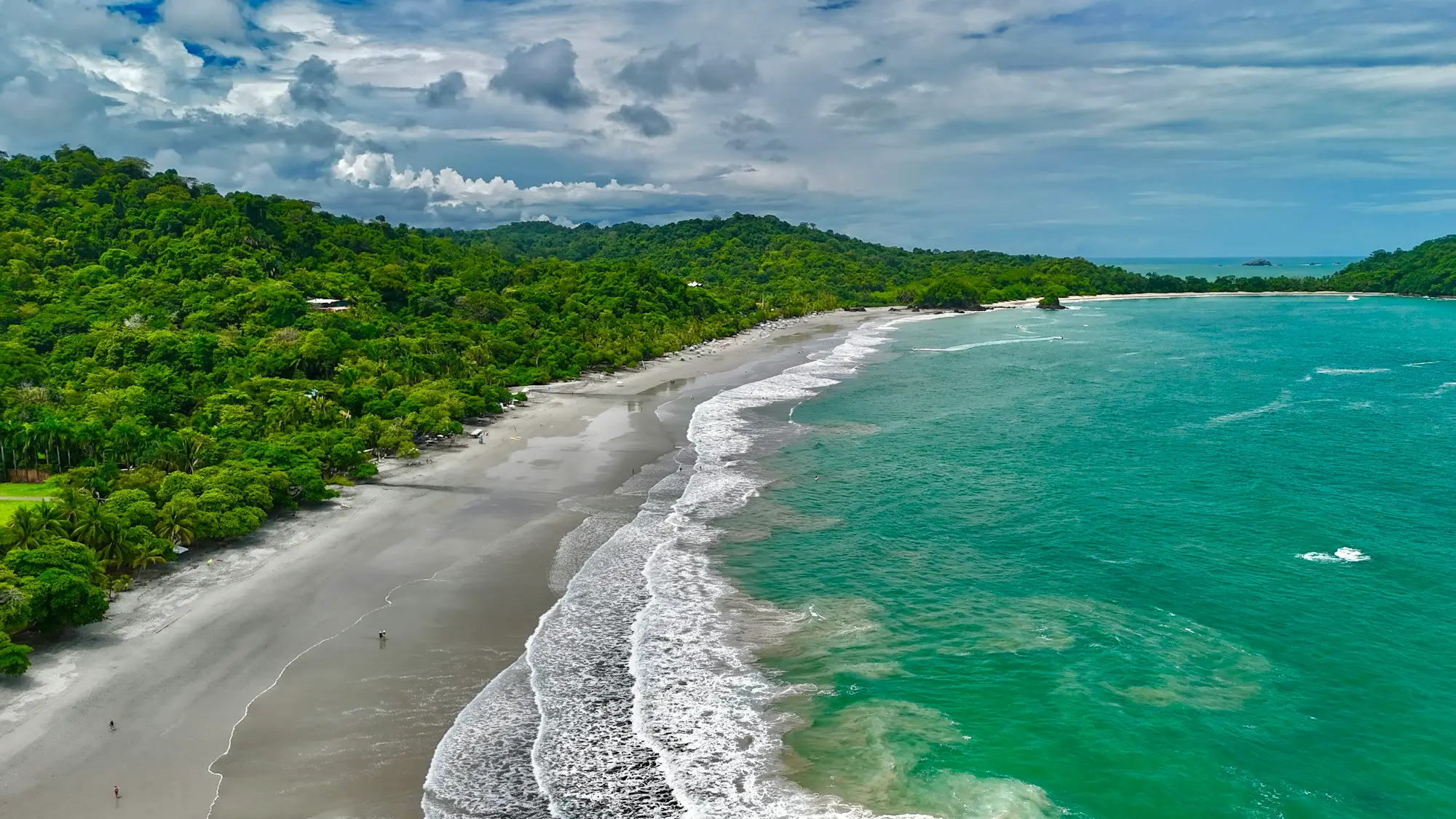
Two picks break the Guanacaste default. Manuel Antonio, on the central Pacific near Quepos, is a calm swimmable beach right beside a national park with sloths and monkeys. Be honest with yourself about the crowds, and watch your things, because the monkeys and raccoons steal food and beach theft from unattended bags is common.
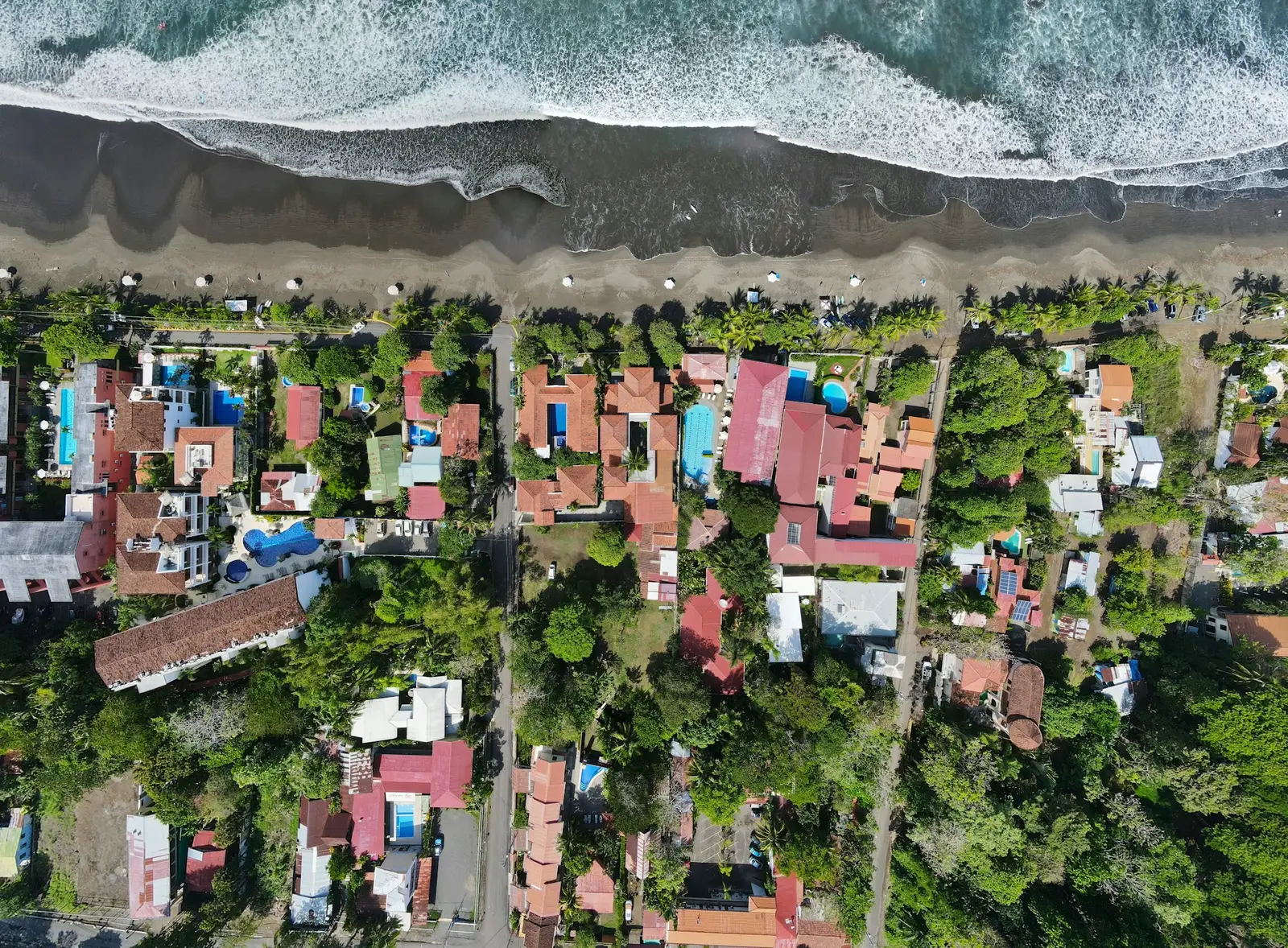
The Caribbean is the other break. Around Puerto Viejo, Cahuita, and Manzanillo you get Afro-Caribbean culture, reef snorkeling, and the black-sand beaches people search for. Remember the season flips here, so this coast is at its best February to March and September to October, not in the December Pacific peak. Skip the Caribbean if your dates are in December or you need the fastest Liberia beach access.
Getting to the Beach: Airport, Real Drive Times, and the 4x4 Question
Pick the airport by coast. Liberia (LIR) is the gateway for Guanacaste and Nicoya, while San José (SJO) is closer for the central and south Pacific and the Caribbean.
Use real drive times, not raw Google Maps figures. Mountain and unpaved routes can take up to twice the Maps estimate, so confirm any long transfer against recent traveler reports before you plan a same-day arrival.
Here are rough, airport-anchored drive times to plan around, all subject to traffic and road conditions:
| From airport | To | Approx. drive |
|---|
| Liberia (LIR) | Tamarindo and north Guanacaste | 1 to 1.5 hours |
| Liberia (LIR) | Nicoya (Sámara, Nosara, Santa Teresa) | 2 to 3.5 hours |
| San José (SJO) | Manuel Antonio / Quepos | about 3 hours |
| San José (SJO) | Puerto Viejo (Caribbean) | 4 to 4.5 hours |
Then the rental reality. Costa Rica requires every driver to carry mandatory third-party liability insurance, the Tarifa Básica or TPL. It runs about $15 per day, you cannot decline it, and your credit card or travel insurance does not replace it.
On the car itself, a regular sedan handles most paved beach towns. A 4x4 only matters for the dirt access roads in parts of Nicoya and some Osa or Caribbean back roads.
What It Costs, and the Risks Nobody Ranks: Rip Currents, Crocodiles, and Beach Theft
On budget, be realistic. A week on $500 is tight but possible if you stay in hostels or sodas away from the Guanacaste resort strip, and it is not enough for a beachfront resort week. Meals show the same split, and these are approximate ranges that shift with season and demand:
| Where | Casado price |
|---|
| Local soda | $6 to $8 |
| Tourist-facing restaurant | $18 to $22 |
Lodging swings just as wide, so match the tier to your budget rather than the photos:
| Lodging | Per night |
|---|
| Hostel dorm or simple cabina | $15 to $40 |
| Mid-range hotel | $80 to $180 |
| Beachfront resort (Guanacaste) | $250 and up |
Then the risks the lists skip. Rip currents are the real hazard on surf beaches, so if you are caught, do not fight the current, and swim parallel to shore until it releases you. Crocodiles live in many river mouths and estuaries, so never swim where a river meets the sea. Beach theft is common too, so leave nothing in a parked car at a trailhead and never leave bags unattended while you swim.
Frequently Asked Questions
Which part of Costa Rica has the best beaches?
It depends on your dates and what you want. Guanacaste has the fastest access and the most reliable December-to-April sun, Nicoya has the quieter alternatives, Manuel Antonio pairs a calm swim beach with wildlife, and the Caribbean is best February to March and September to October.
Are the beaches in Costa Rica swimmable?
Some are, but many famous ones are surf beaches with rip currents. The reliable swim beaches include Sámara, Playa Conchal, and the cove at Manuel Antonio, so sort by water type before you book.
Should I fly into Liberia or San José for the beaches?
Fly into Liberia (LIR) for Guanacaste and the Nicoya Peninsula, and into San José (SJO) for the central and south Pacific and the Caribbean. Matching the airport to your coast saves hours of driving.
What is the best time of year for a Costa Rica beach trip?
For the Pacific coast, December through April is the dry season. The Caribbean runs on the opposite calendar, driest around February to March and September to October, so match your coast to your month.
Are there black sand beaches in Costa Rica?
Yes, mainly on the Caribbean side around Puerto Viejo and near some volcanic stretches of the Pacific. They are normal, not a sign of dirty water.
Do I need a 4x4 to reach the beaches?
Not for most paved beach towns, where a regular sedan is fine. A 4x4 only helps for the dirt access roads in parts of Nicoya and some back roads on the Osa Peninsula and the Caribbean.